
How could I possibly add to such a flattering introduction as the one given by Chris below? I just don't think I could...but I will try. The feelings of influence and critique on music and artistry are mutual between Chris and myself. For years we have traded, discussed and even argued a bit about the merits of various artists and their abilities to move us, define us, and construct us. The results of this long standing exchange seem to ebb and flow as we continue to push each other into new, and sometimes old, terrain. Regardless, I think both of us are better for it, which is exactly what we have friends for.
However, despite Chris's high acclaim of my tastes, I am never convinced of my musical understanding. This mix simply puts together some alt with some indie with some pop...whatever that means. The first song, "Heart to Fool", by Natureboy killed on first listen. Haunting and visceral, the song contrasts heavily with Neon Indian's pushing lo-fi electronica on "Psychic Chasms." The female duo The Pack A.D. follows to rock with blues inspired goodness and confirms that Becky Black is a voice to be reckoned with. Rob Crow smooths out. The Boxer Rebellion pops rock. daranyck previews the upcoming season. The Rocketboys make intelligent pop. Finally, Sleigh Bells make for fun.
Hope you enjoy it and thanks Chris...for everything.
Wednesday, January 27, 2010

Tuesday, January 26, 2010
Guest Mix 03: a.fluid.affect: volume IV
 This week's guest mix comes courtesy of one of my oldest and dearest friends, Mr. Carl Beach. Quite possibly one of my most influential friends, Carl has been instrumental in introducing me to many of my favorite artists (The Cure, Pixies, and Concrete Blonde to name a few). I still have a cassette tape that he gave me years ago (and yes, dear listeners, we shall revisit that mix in due time).
 All of Carl's mixes come highly recommended and he plans to be a regular contributor to this blog. You can find more music and a series of his essays by visiting his blog at http://thefluidaffect.com. And finally, let it be known, here and now, that Carl was the FIRST to lambast, critique and poke fun of my obsession with hair metal. The rest of you naysayers have some catching up to do!
An introduction from Carl as well as track listing will be posted shortly. The download is available now.
Click Here to Download
Tuesday, January 19, 2010
Mix 03: Infrequency
 For the past 30 years or more, artists have bemoaned change as they wax nostalgic for the days when rock and roll was at its most pure. For Don McClean, singer of “American Pie,” the music died with Buddy Holly, Ritchie Valens and the Big Bopper. Some critics would argue rock and roll ended with the Beatles, or would cite the date of death somewhere between 1972 and 1974. Others would claim disco killed rock and roll. Or punk. Or MTV. Others blame Kurt Cobain.
So, is rock and roll really dead?
According to Nielsen SoundScan, CD sales dropped 45 percent from 2000 to 2008. Tower Records, Sam Goody, and a score of other music outlets sank into oblivion during the course of the last decade. Major big-box stores like Wal Mart and Best Buy continue to cut back on CD shelf space while mom-and-pop record stores are hanging on by the skin of their teeth. It truly is the end of an era.
So, with that in mind, I thought I would put up a mix that celebrates the evolution of music. This one focuses primarily on the days of rock and roll radio—using a mixture of tunes that span four decades. You get two Ramones tracks, a rousing rocker by the Boss, a folk ditty by Tom Petty, a couple of F-bombs from Steve Earle, and a collaboration between Stone’s guitarist Mick Taylor and one of my favorite bands, Dramarama (doing “Classic Rot,” a song protesting the monotonous classic rock format —you know, those stations that have played the same four Dylan, Zeppelin and Rolling Stone songs over and over again for the past 30 years).
Finally, I was originally going to write about why I chose the title “Infrequency,” but I’ll opt to let you figure it out. Note: it has nothing to do with bowel movements.
Do You Remember Rock and Roll Radio? • Ramones
Classic Rot • Dramarama
Radio, Radio • Elvis Costello
Telstar • The Ventures
Let There Be Rock • AC/DC
The Last DJ • Tom Petty & The Heartbreakers
Radio Nowhere • Bruce Springsteen
F the CC • Steve Earle
Pumping on Your Stereo • Supergrass
Stay Positive • The Hold Steady
We Want the Airwaves • Ramones
Available Upon Request
Friday, January 15, 2010
Guest Mix 02: Captain Captain Vs. the Holy Mountain

Audio Autocracy's second Guest Mix, courtesy of Josh Whitehead.
Part II of the Whitehead takeover, as we’re prone to do, just ask Chris (wink wink). This mix has no theme other than I listen to a lot of hip-hop, and not the stuff you hear on the radio, but the stuff that you should be hearing on the radio. The kind of hip-hop that reminds me why I first loved NWA and Tribe Called Quest and De La Soul, etc etc. So this is just a small collection from a rather large playlist I’m constantly compiling so I don’t lose track of the good hip-hop that I come across. Originally I started mixing it with interludes of my own beats, but decided against it, but stay tuned for a future mix with music by yours truly. For now, enjoy the work of professionals. So go rent the Holy Mountain and remember:
DRINK YOUR SCHOOL, STAY IN DRUGS, AND DON’T DO MILK.
1. Oh No – Midnight Missions
2. Jay Electronica – Exhibit C
3. Black Milk – Keep Going
4. Q-Tip – You
5. Strong Arm Steady – Questions ft. Planet Asia & Fashawn
6. Brother Ali – Us
7. Self Scientific – Designer Music
8. Fashawn – Life As A Shorty ft. J. Mitchell
9. BK-One – The True & Living ft. Raekwon & I Self Divine
10. Kam Moye - Reborn
Click Here to Download
Guest Mix 01: Live For Today, Because Tomorrow...
 Welcome to Audio Autocracy's first Guest Mix, courtesy of Mr. Jon Whitehead (AKA JLeopard).
Well, well, well, guess I'm the big nerd who jumped on the offer to post his own mix on the autocratic audiophile site. The theme for this mix is all-live tracks from some of my favorite bands. There is one(I think) cool cover on here and otherwise just good live stuff. Are there better live tracks out there? Most likely, but these were the ones I had and could find. I love live music, and hearing live tracks that are well recorded because they remind you of being in the audience and either hearing your favorite music done by your favorite bands. Or when your favorite bands stretch outside their catalogue and play something that they like by another band, always a cool moment. Hope you enjoy, hope it helps the blog, let me know what you think.
Tracklist
1. Foo Fighters- Keep The Car Running
2. Neil Young- Cinnamon Girl
3. Wilco- Handshake Drugs
4. Lou Reed- Sweet Jane
5. Pearl Jam- Daughter
6. Black Crowes- Cursed Diamond
7. Arcade Fire/David Bowie- Wake Up
8. The Band- The Shape I'm In
9. Wilco- California Stars
10. Allman Bros. Band- One Way Out
Click Here to Download
Monday, January 11, 2010
Mix 02: Walk Believer Walk
 "I don't know which will go first—rock and roll or Christianity," John Lennon once quipped. The end result was a conservative backlash against the Beatles, one that resulted in a legion of betrayed fans burning their albums and denouncing Lennon as a Satanic heretic.
 Throughout the subsequent decades, parents continued to wage a morality war against rock and roll. From John Lennon to Ozzy Osbourne, to Prince and Marilyn Manson, the "devil's music" has taken many shapes and forms. But if the parents had really listened, if they had looked beyond the shock, beyond the noise, they would have discovered artists searching for spiritual direction.
What does this all have to do with this week's mix? Not much really. The songs presented here are all contemporary, but each harken back to the sounds and spirit of the late 60s and early 70s, when artists like Led Zeppelin, Black Sabbath and Neil Young took rock and roll into a different era. An amalgamation of the blues, gospel and folk filtered through amplifiers. This is rock and roll. Yesterday's parents would surely find this all very objectionable. But I suggest, dear listeners, that sometimes a little rebellion is our only means home. Keep walking...
01. California Queen • Wolfmother
02. Angels • Black Mountain
03. Strange Times • The Black Keys
04. Things Fall Apart • Built To Spill
05. Walk Believer Walk • The Black Crowes
06. Scumbag Blues • Them Crooked Vultures
07. Malignant Narcissism • Rush
08. Treat Me Like Your Mother • The Dead Weather
09. (Get Off Your) High Horse Lady • Oasis
10. Top Yourself • The Raconteurs
Available Upon Request
Thursday, January 7, 2010
Origins of the Mixtape
Courtesy of Wikipedia.
A mixtape, which usually reflects the musical tastes of its compiler, can range from a casually selected list of favorite songs, to a conceptual mix of songs linked by a theme or mood, to a highly personal statement tailored to the tape's intended recipient. Essayist Geoffrey O'Brien has called the personal mixtape "the most widely practiced American art form", and many mixtape enthusiasts believe that by carefully selecting and ordering the tracks in a mix, an artistic statement can be created that is greater than the sum of its individual songs, much as an album of pop music in the post-Beatles era can be considered as something more than a collection of singles.
With the advent of affordable, consumer-level digital audio, creating and distributing mixes in the form of compact disc or MP3 playlists has become the contemporary method of choice, but the term mixtape is still commonly used, even for mixes in different media (CD, MP3, MiniDisc, audio cassette 8 track, etc.). Video mixtapes have emerged as well.
 Homemade mixtapes became common in the 1980s. Although the compact audio cassette by Philips appeared at the 1963 Berlin radio show, the sound quality of cassettes was not good enough to be seriously considered for music recording until further advances in tape formulations, including the advent of chrome and metal tape. Before the introduction of the audio cassette, the creation of a pop music compilation required specialized or cumbersome equipment, such as a reel-to-reel or 8 track recorder, that was often inaccessible to the casual music fan. As cassette tapes and recorders grew in popularity and portability, these technological hurdles were lowered to the point where the only resources required to create a mix were a handful of cassettes and a cassette recorder connected to a source of prerecorded music, such as a radio or LP player. The 8-track tape cartridge was more popular for music recording during much of the 1960s, as the cassette was originally only mono and intended for vocal recordings only, such as in office dictation machines. But improvements in fidelity finally allowed the cassette to become a major player. The ready availability of the cassette and higher quality home recording decks to serve the home casual user allowed the cassette to become the dominant tape format, to the point that the 8 track tape nearly disappeared shortly after the turn of the 1980s. The growth of the mixtape was also encouraged by improved quality and increased popularity of audio cassette players in car entertainment systems, and by the introduction of the Sony Walkman in 1979.
A distinction should be drawn between a private mixtape, which is usually intended for a specific listener or private social event, and a public mixtape, or "party tape", usually consisting of a recording of a club performance by a DJ and intended to be sold to multiple individuals. In the 1970s, such DJs as Grandmaster Flash and the Furious Five, Afrika Bambaataa and the Soulsonic Force, Kool Herc and the Herculoids, DJ Breakout, the Funky Four, and DJ Hollywood would often distribute recordings of their club performances via audio cassette, as well as customized recordings (often prepared at exorbitant prices) for individual tape purchasers. These recordings tended to be of higher technical ability than home-made mixtapes and incorporated techniques such as beatmatching and scratching. One 12 October 1974 article in Billboard Magazine reported, "Tapes were originally dubbed by jockeys to serve as standbys for times when they did not have disco turntables to hand. The tapes represent each jockey's concept of programming, placing, and sequencing of record sides. The music is heard without interruption. One- to three-hour programs bring anywhere from $30 to $75 per tape, mostly reel-to-reel, but increasingly on cartridge and cassette." Club proprietors, as well as DJs, would often prepare such tapes for sale.
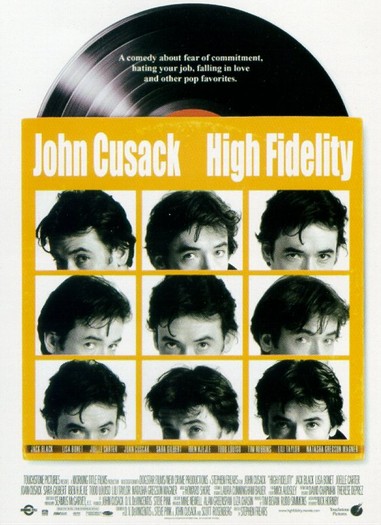 Throughout the 1980s, mixtapes were a highly visible element of youth culture. However, the increased availability of CD burners and MP3 players and the gradual disappearance of cassette players in cars and households have led to a decline in the popularity of the compact audio cassette as a medium for homemade mixes. The high point of traditional mixtape culture was arguably the publication of Nick Hornby's novel High Fidelity in 1995. Since then, mixtapes have largely been replaced by mix CDs and shared MP3 playlists, which are more durable, can hold more songs, and require minutes (rather than hours) to prepare. While some mixtape enthusiasts bemoan the obsolescence of the cassette tape, others concede that the greater convenience offered by the mix CD has expanded the possibilities and accessibility of the medium, as indicated by the recent resurgence of mix-swapping clubs that trade mix CDs by regular mail. Some mix enthusiasts also appreciate the potential of the mix CD for extended, continuous mixes and creative album art.
From an artistic point of view, many creators of mixtapes seem to regard them as a form of emotional self-expression, although whether a mixtape retains the same web of emotional associations when passed from its creator to the recipient is, at best, debatable. Some argue that in selecting, juxtaposing, or even editing originally unrelated tracks of pop music into a new work of art, the "author" of a mixtape moves from passive listener to archivist, editor, and finally active participant in the process of musical creation. (Some legitimacy for this viewpoint was provided by Cassette Stories, a 2003 exhibition at the Museum of Communication in Hamburg, Germany, which featured stories and submissions from eighty mixtape enthusiasts.)
However, this perception of the mixtape as a work of art has been criticized as resulting in a sort of elitism, with creators becoming more concerned with finding arcane and surprising combinations of tracks than with creating a tape that is listenable, enjoyable, or appropriate to its intended recipient. (In High Fidelity, for example, the narrator's girlfriend complains that his mixtapes are too didactic.) On a very basic level, the creation of a mixtape can be seen as an expression of the individual compiler's taste in music, often put forward for the implicit approval of the tape's recipient, and in many cases as a tentative step towards building the compiler's personal canon of pop music.
A mixtape, which usually reflects the musical tastes of its compiler, can range from a casually selected list of favorite songs, to a conceptual mix of songs linked by a theme or mood, to a highly personal statement tailored to the tape's intended recipient. Essayist Geoffrey O'Brien has called the personal mixtape "the most widely practiced American art form", and many mixtape enthusiasts believe that by carefully selecting and ordering the tracks in a mix, an artistic statement can be created that is greater than the sum of its individual songs, much as an album of pop music in the post-Beatles era can be considered as something more than a collection of singles.
With the advent of affordable, consumer-level digital audio, creating and distributing mixes in the form of compact disc or MP3 playlists has become the contemporary method of choice, but the term mixtape is still commonly used, even for mixes in different media (CD, MP3, MiniDisc, audio cassette 8 track, etc.). Video mixtapes have emerged as well.
Homemade mixtapes became common in the 1980s. Although the compact audio cassette by Philips appeared at the 1963 Berlin radio show, the sound quality of cassettes was not good enough to be seriously considered for music recording until further advances in tape formulations, including the advent of chrome and metal tape. Before the introduction of the audio cassette, the creation of a pop music compilation required specialized or cumbersome equipment, such as a reel-to-reel or 8 track recorder, that was often inaccessible to the casual music fan. As cassette tapes and recorders grew in popularity and portability, these technological hurdles were lowered to the point where the only resources required to create a mix were a handful of cassettes and a cassette recorder connected to a source of prerecorded music, such as a radio or LP player. The 8-track tape cartridge was more popular for music recording during much of the 1960s, as the cassette was originally only mono and intended for vocal recordings only, such as in office dictation machines. But improvements in fidelity finally allowed the cassette to become a major player. The ready availability of the cassette and higher quality home recording decks to serve the home casual user allowed the cassette to become the dominant tape format, to the point that the 8 track tape nearly disappeared shortly after the turn of the 1980s. The growth of the mixtape was also encouraged by improved quality and increased popularity of audio cassette players in car entertainment systems, and by the introduction of the Sony Walkman in 1979.A distinction should be drawn between a private mixtape, which is usually intended for a specific listener or private social event, and a public mixtape, or "party tape", usually consisting of a recording of a club performance by a DJ and intended to be sold to multiple individuals. In the 1970s, such DJs as Grandmaster Flash and the Furious Five, Afrika Bambaataa and the Soulsonic Force, Kool Herc and the Herculoids, DJ Breakout, the Funky Four, and DJ Hollywood would often distribute recordings of their club performances via audio cassette, as well as customized recordings (often prepared at exorbitant prices) for individual tape purchasers. These recordings tended to be of higher technical ability than home-made mixtapes and incorporated techniques such as beatmatching and scratching. One 12 October 1974 article in Billboard Magazine reported, "Tapes were originally dubbed by jockeys to serve as standbys for times when they did not have disco turntables to hand. The tapes represent each jockey's concept of programming, placing, and sequencing of record sides. The music is heard without interruption. One- to three-hour programs bring anywhere from $30 to $75 per tape, mostly reel-to-reel, but increasingly on cartridge and cassette." Club proprietors, as well as DJs, would often prepare such tapes for sale.
Throughout the 1980s, mixtapes were a highly visible element of youth culture. However, the increased availability of CD burners and MP3 players and the gradual disappearance of cassette players in cars and households have led to a decline in the popularity of the compact audio cassette as a medium for homemade mixes. The high point of traditional mixtape culture was arguably the publication of Nick Hornby's novel High Fidelity in 1995. Since then, mixtapes have largely been replaced by mix CDs and shared MP3 playlists, which are more durable, can hold more songs, and require minutes (rather than hours) to prepare. While some mixtape enthusiasts bemoan the obsolescence of the cassette tape, others concede that the greater convenience offered by the mix CD has expanded the possibilities and accessibility of the medium, as indicated by the recent resurgence of mix-swapping clubs that trade mix CDs by regular mail. Some mix enthusiasts also appreciate the potential of the mix CD for extended, continuous mixes and creative album art.From an artistic point of view, many creators of mixtapes seem to regard them as a form of emotional self-expression, although whether a mixtape retains the same web of emotional associations when passed from its creator to the recipient is, at best, debatable. Some argue that in selecting, juxtaposing, or even editing originally unrelated tracks of pop music into a new work of art, the "author" of a mixtape moves from passive listener to archivist, editor, and finally active participant in the process of musical creation. (Some legitimacy for this viewpoint was provided by Cassette Stories, a 2003 exhibition at the Museum of Communication in Hamburg, Germany, which featured stories and submissions from eighty mixtape enthusiasts.)
However, this perception of the mixtape as a work of art has been criticized as resulting in a sort of elitism, with creators becoming more concerned with finding arcane and surprising combinations of tracks than with creating a tape that is listenable, enjoyable, or appropriate to its intended recipient. (In High Fidelity, for example, the narrator's girlfriend complains that his mixtapes are too didactic.) On a very basic level, the creation of a mixtape can be seen as an expression of the individual compiler's taste in music, often put forward for the implicit approval of the tape's recipient, and in many cases as a tentative step towards building the compiler's personal canon of pop music.
Monday, January 4, 2010
Mix 01: Panoramic By Design

Panoramic By Design, the first mix to be offered on this site, is a collection of some of my favorite songs released during the past couple of years. Most of these songs are optimistic, even anthemic, others are more subdued and reflective—a suitable sendoff to a decade marked by hope and resignation. For many of us, the past ten years was the end of an era—an end to innocence. We went to sleep as children and woke up as adults. Suddenly, the world became a very frightening place. Yet, not all is lost. There are moments when our inner child rises to wage war with the bitter monsters of the grownup world. And if we are lucky, love, hope and a sense of adventure will prevail. For this coming decade, let's let the kids win.
01. Life In Technicolor • Coldplay 2:30
02. No Line On The Horizon • U2 4:04
03. Knocked Up • Kings of Leon 7:08
04. Windowsill • Arcade Fire 4:10
05. My Body's A Zombie For You • Dead Man's Bones 4:07
06. Kids • MGMT 4:53
07. Garbage Heap • Black Francis 2:45
08. Of Monsters, Heroes and Men • James 4:36
09. DLZ • TV On The Radio 3:38
10. Heads Will Roll • Yeah Yeah Yeahs 3:41
Available Upon Request
Welcome to Audio Autocracy
Welcome to Audio Autocracy, a site dedicated to the preservation of sharing music. It was illegal then, and it's illegal now. But there has always been something quite wonderful about giving and receiving mixtapes. I have a box of them still. Like tiny time capsules, they take me back to the days before IPods and the internet, back into a time when it was still cool to scrawl the names of your favorite bands onto your notebook and slip the girl of your dreams a cassette filled with sentiment you could only dream of saying aloud.
Cassette tapes gave way to the compact disc, and now CDs are on the verge of extinction. Someday, an archeologist will unearth my home and discover close to 1,000 of these shiny artifacts and wonder what primitive man would waste so much money on such trifles? Actually, my children will probably wonder the same question in just a few years.
Yet, I remain dedicated.
My first mixtape was given to me by my father many years ago. It was then when I first heard the Beatles, Cat Stevens, and other artists my dad deemed safe for my listening ears. Twenty-five years later, he still sends me music—introducing me to Arcade Fire, Dr. Dog, TV on the Radio, and a ton of other great artists. And then there were the CDs and tapes given to me by close friends and allies, ladies and gentlemen alike. I've kept them all. And perhaps, dear listeners, we shall revisit some of those mixtapes together.
So join me, once a week, as I unleash a new mix onto the world. There will be a variety of genres and sounds—moods and themes. Each mix will be contained to ten songs so as to alleviate boredom. This blog will also feature mixes from special contributors—a select group of friends whose tastes have influenced my own. Feel free to comment, make suggestions or send requests, and, above all, enjoy the tunes.
Cassette tapes gave way to the compact disc, and now CDs are on the verge of extinction. Someday, an archeologist will unearth my home and discover close to 1,000 of these shiny artifacts and wonder what primitive man would waste so much money on such trifles? Actually, my children will probably wonder the same question in just a few years.
Yet, I remain dedicated.
My first mixtape was given to me by my father many years ago. It was then when I first heard the Beatles, Cat Stevens, and other artists my dad deemed safe for my listening ears. Twenty-five years later, he still sends me music—introducing me to Arcade Fire, Dr. Dog, TV on the Radio, and a ton of other great artists. And then there were the CDs and tapes given to me by close friends and allies, ladies and gentlemen alike. I've kept them all. And perhaps, dear listeners, we shall revisit some of those mixtapes together.
So join me, once a week, as I unleash a new mix onto the world. There will be a variety of genres and sounds—moods and themes. Each mix will be contained to ten songs so as to alleviate boredom. This blog will also feature mixes from special contributors—a select group of friends whose tastes have influenced my own. Feel free to comment, make suggestions or send requests, and, above all, enjoy the tunes.
Subscribe to:
Posts (Atom)